-
Creative Formulas and Being Mindful
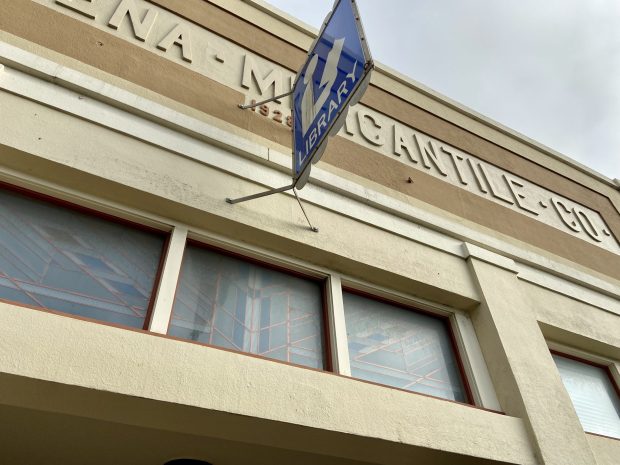
Looking up at the sign at my new library. “Essential Skills + Mindset² x Support = Success” (Stephens, 2019, p. 32).
When I was a young college student, I was majoring in psychology. In one class, my professor, Dr. Sharon Ng, discussed the role of art in therapy, how it helped people to “bleed onto the page”. That concept has stayed with me, even almost—cough—30 years later. It helps to strengthen me when I argue the importance of including art programs in the library and insisting that library workers—no matter their role—be given the option to participate in the programs. I have witnessed firsthand how being involved allows creativity to flow into all aspects of the library, strengthening the connection of staff to the library and its patrons as well as building empathy for all.
Cowell (2017) argued that creativity should be embedded in the library, that managers should embrace the outside-the-box thinking that staff brings to the table. Stephens (2019) discussed the importance of being “compassionate creatives”, that desirable skills in library workers included “creativity in some form, as well as an emphasis on meeting our work with humanism, grace, and kindness” (p. 34). When upper management supports the ingenuity of staff, libraries are allowed to evolve, to better serve the needs of their communities, to be creative spaces. Cowell (2017) recommends giving staff time, being transparent with budgets, giving purpose, setting priorities, and saying yes. Being open to change and creativity, avoiding cynicism, and being mindful are ways that management can support and grow a library of the heart.
I began working at libraries early on, volunteering in school libraries in junior high and high school, graduating to public libraries once I started college. The one thing that was consistent—besides the smell of books—was how much librarians cared about their communities. That is what led me to leave marketing, take a pay cut to become a library assistant, work my way up, and finally choose to go back to school to get my MLIS. That dedication to the public was something that I wanted to be a part of, and something I hope to never forget as I become a manager myself.
References
Cowell, J. (2017, May 28). A challenge to library managers: Embed creativity in your library. Medium. https://janecowell8.medium.com/a-challenge-to-library-managers-embed-creativity-in-your-library-496d540ab7a3
Stephens, M. (2019). Whole-hearted librarianship: Finding hope, inspiration, and balance. American Library Association.
-
Director’s Brief

At the beach after visiting the town of Point Arena, California. To serve the Point Arena, California community with the opportunity for evolving educational needs, empowering Mendocino County patrons to communicate with library staff about what and how they wish to learn… read more
-
Always Learning
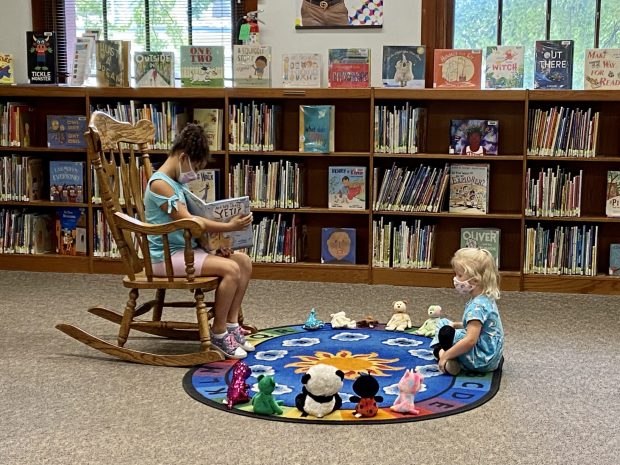
A sweet scene I captured soon after we reopened the library to the public. There are many types of learning. We can learn a lot just from observing—just paying attention in a library space can lead to many learning opportunities—and that observation can lead to even more levels of learning. Modeling is a technique used when training new staff members. Someone who has worked on the circulation desk for years can show how to be more efficient to a new employee or what the library’s cultural expectations for interacting with staff and the public are. Modeling is also used by librarians as a way for both children and their caregivers to learn early literacy skills. Children take that modeling and turn it into play, similar to what The Lego Foundation (2016) used when teaching a new skill. As they found, every result was different, but they were all valuable (The Lego Foundation, 2016). Play is also a part of sensory learning and experience, as was shown in the Marsden Library’s Sensory Space (Public Libraries Connect, 2020).
Play as a learning experience is something that we talk about a lot in early literacy. In fact, the five early literacy practices are talk, sing, read, write, and play (Ghoting & Martin-Díaz, 2013). I discuss those practices at the beginning of every storytime, reminding caregivers that there are many aspects that are important to learning. The photo above of one of my storytime graduates is a good example of both play and modeling. I try to bring that knowledge of play as a literacy practice into my training as well, remembering to approach it with a sense of fun along with the goal of teaching. It is easier to retain information when one is not stressed out, after all.
Library staff is lucky enough to get to learn every day. Each patron who walks through the door brings their own experiences and ways of looking at the world, and that can be amazing. Those unique perspectives can also be stressors. As Simon (2020) stated, expressing expected emotions when interacting with the public is its own form of labor and one that often leaves librarians feeling drained. When I was a cashier at a grocery store, I often interacted with 100 people during a shift. That was 100 different Mellisas I also needed to be, as each customer expected something slightly different from the last. As an introvert, I often needed to sit in a quiet room with the lights dimmed for a long period of time in order to recover after a shift. That emotional labor is also a core component of library work (Simon, 2020). As Simon (2020) found, having something that challenged library staff outside of public interaction helped in dealing with that stress.
That brings us back to learning. As supervisors, we can offer all staff opportunities to enrich their experiences at work. We can offer them training in how to deal with emotional labor, but we can also offer more. As Sally (2016) found, making the library a classroom for frontline employees can help to offer professional development for those who often get left behind. By utilizing tools like the 3-2-1 plan discussed by Stephens (2019), we can reinforce the importance of that learning within the job. I recently signed up my assistant for a webinar series that explores outreach opportunities as well as teaching literacy to school-age children. She had been feeling run down and uninspired, but since beginning the course, her eyes are sparkling, she is coming to me with new ideas for how to incorporate what she learned, and she is passionate about her job again. We discuss the training, I reinforce what she has learned with my own experience, and as her supervisor, I support her excitement by finding ways for her to use her new knowledge in the field. Learning can be good stress, an enriching experience, and it can be an amazing tool to keep employees engaged and the library a relevant place in the 21st Century.
References
Ghoting, S. N., & Martin-Díaz, P. (2013). Storytimes for everyone!: Developing young children’s language and literacy. ALA Editions, an imprint of the American Library Association.
The Lego Foundation. (2016). What do we mean by learning through play? [Film]. Vimeo. https://www.legofoundation.com/en/learn-how/knowledge-base/what-we-mean-by-learning-through-play/
Public Libraries Connect. (2020, February 17). Check out Marsden Library’s Sensory Space! https://plconnect.slq.qld.gov.au/blog/check-out-marsden-librarys-sensory-space
Sally. (2016, June 24). The library as a classroom for library staff. FINDING HEROES. https://findingheroes.co.nz/2016/06/28/the-library-as-a-classroom-for-library-staff/
Simon, K. (2020). Emotional labor, stressors, and librarians who work with the public. School of Information Student Research Journal, 10(1). https://doi.org/10.31979/2575-2499.100106
Stephens, M. (2019). Whole-hearted librarianship: Finding hope, inspiration, and balance. American Library Association.
-
We Are Stories
My grandma—one of my favorite people. I miss her a lot. A few years ago, I took a class on video editing. At the time, I was in charge of social media for a locally owned business, and videos were becoming the thing. We learned how to storyboard, how to keep photographs from feeling static, and how to sync sound with image. Most of all, we learned how to present a story. The final project needed to be five minutes and contain a certain number of specific things to show how much we had learned over the semester. I wrote a few fictional pieces, but my grandma’s stories, filled with no-nonsense hope and perseverance, kept returning to me as I tried to develop my project. When I showed “Everyone Calls Me Tommie” to the class—a masterwork by no means but motivated by love—it inspired those who still could to interview the elders in their lives. We are, after all, made up of stories as much as we are flesh and blood.
While my five-minute film was posted on YouTube, there were some similarities to Ray’s (2019) description of the Human Library. My grandma’s experience as a migrant farmworker fleeing Oklahoma during the Dust Bowl had been used to discriminate against her. She was an Okie. For a time, she was homeless, a young girl living with her family in the river bottoms. The minute people got to hear her story, she became human to them, deserving of compassion. Like mentioned by Ray (2019), her tale being told allowed her to be “unjudged.”
Libraries have a special relationship with their towns. They are not only bastions of knowledge, they are community hubs, allowing all types of people to feel welcomed and safe. As Stephens stated so concisely, “every voice should be heard. Every story told” (Paxaman, 2019). Libraries have the privilege of being an environment that can be used to connect people, share stories, and help them create. Our public library has hosted Community Conversations for many years, striving to bridge the widening gap between people on different ends of the political spectrum or those who feel threatened by how the county is changing with new populations moving from the Bay Area and Southern California. Community Conversations has allowed people to hear each other’s stories and to recognize that we are all more alike than we are different.
My grandma passed away this January at the age of 94, her strong, loving heart growing weary at last. I miss her every day, but I am comforted by the memory of a project completed before I learned about the importance of libraries as the stewards of stories. For those five minutes of video, there are hours of interviews, containing the tales of a life well-lived. They now belong in my personal library, waiting for family and friends to view and enjoy, and perhaps to someday be a part of a longer film personalizing the struggles and triumphs of one woman who survived the Dust Bowl and beyond. As a librarian it is my responsibility, after all, to not only keep stories but to share and make them as well (Stephens, 2019).
References
Paxaman, M. (2019, September 3). Challenged but not dying, the public libraries are more relevant than ever. Jutland Station. http://www.jutlandstation.dk/challenged-but-not-dying-the-public-libraries-are-more-relevant-than-ever/?fbclid=IwAR1g1o4r9XqHTuu8IuGOIWQcGW_EC40ID99C4OYkDxF3xuMiDoWhnpG8Spw
Ray, M. (2019, April 12). Courageous conversations at the human library. Next Avenue. https://www.nextavenue.org/courageous-conversations-human-library/
Stephens, M. (2019). Whole-hearted librarianship: Finding hope, inspiration, and balance. American Library Association.
-
Planning for Participatory Service: Culinary Literacy
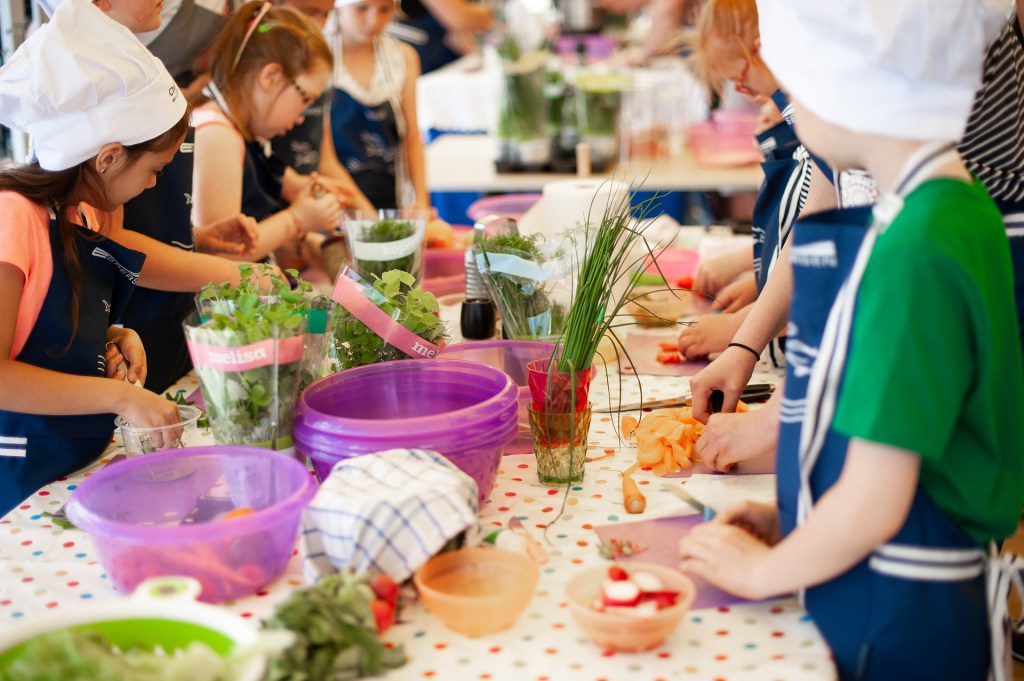
Image by Andrzej Rembowski on Pixabay Culinary Literacy Service at the Nevada County Community Library
Goals & Objectives
For three years, Nevada County Community Library has been offering youth ages 0-18 Lunch at the Library during its Summer Learning Program (Friends of the Nevada County Libraries, 2019). In its first summer, the program reached almost 2,000 participants (Friends of the Nevada County Libraries, 2019). By the end of 2021’s summer program, Lunch at the Library had reached almost 3,000 children and teens, with another 1,500 youth also being served breakfast (Lunch at the Library, 2021). While meals were available only to youth, feedback from caregivers showed that access to food for their children meant that they were also able to eat at home since their children had been already been fed (Lunch at the Library, 2021). These numbers reflect food insecurity in Nevada County, something that could be addressed through Culinary Literacy programming at the public library. While these programs would begin in the youth services department, it has the potential to grow into adult services in the future.
As Stephens (2014) stated, library spaces can be community-learning spaces, giving patrons the opportunity to learn, explore, and be creative. By focusing on food and ways to prepare it, tweens and teens can be empowered to create meals for themselves and their families. The interactive model will begin virtually with grab-and-go bags that contain pantry staples and will move to an in-person format once it has been deemed safe to do so by the County Librarian and Public Health. Culinary Literacy uses a different type of virtual format, requiring participants to email or direct message photos and lists of ingredients of their creations to the Youth Services Librarian. A discussion on Zoom the following month gives young patrons the opportunity to interact with each other, trade success stories as well as failures, laugh about the process, and learn from one another. Stephens (2014) discussed how offering learning opportunities can bring people together, and this is a great way to achieve this goal. It also gives youth the building blocks to being more confident with meal preparation. Suggestions to use cookbooks, as well as the library’s digital resources, will be given each month, with some helpful links as a way for tweens and teens to know how to begin. A monthly drawing for participants—with bonus entries for palatable meals—will be another way to draw patrons in, establishing the habit of attendance for a wider spectrum of programs once in-person programming is an option.
Once in-person programming is available, Culinary Literacy will offer classes on cooking basics, nutrition science, and shopping on a budget, though the virtual format that was introduced as the first step will also continue to be offered. Aspects similar to other libraries’ Adulting 101 programs will be addressed (Ford, 2018). Local bakers, cooks, and chefs will be invited to share their knowledge through demonstrations. The Food Bank of Nevada County and local grocery stores will also be invited to contribute. An ongoing youth TV program in partnership with Nevada County Media will be accessible through their station as well as on YouTube. Working with these community agencies and individuals will aid in growing community connections. As Casey (2011) explained, the participatory library communicates through many mechanisms in order to involve its community.
Community
The community to be engaged will be youth ages eight to 18, i.e. tweens and teens, who use the Grass Valley Library—Royce Branch as their main public library in Nevada County, California as well as those accessing the library through virtual methods.
Action Brief Statement
Patrons
Convince teens and tweens that by participating in Culinary Literacy programming they will gain knowledge and experience with meal preparation which will aid them in nutrition literacy because cooking and preparing meals are important aspects of nutritional health and living on a budget.
Library Administration
Convince library administration that by supporting Culinary Literacy Service they will be addressing the needs of the community which will build stronger patronage because families’ food insecurity will be addressed by the public library and community partners. It will also create more interest and youth participation in the library. As Casey & Stephens (2008) stated, “If we don’t get them in as kids and keep them as teens, we likely won’t see them later in life.”

Image by Jame Lee on Pixabay Evidence and Resources
🍋ALSC Building Partnerships. (2018, April 17). Libraries partner with community agencies to help fight food insecurity. ALSC Blog. https://www.alsc.ala.org/blog/2018/04/libraries-partner-with-community-agencies-to-help-fight-food-insecurity/
🍋Bruce, J., De La Cruz, M., Moreno, G., & Chamberlain, L. (2017). Lunch at the library: Examination of a community-based approach to addressing summer food insecurity. Public Health Nutrition, 20(9), 1640-1649. https://doi.org/10.1017/S1368980017000258
🍋Collins, L. (2021, April 9). Feeding more than minds at the library. Public Libraries Online. http://publiclibrariesonline.org/2021/04/feeding-more-than-minds-at-the-library/
🍋I Love Libraries. (2020, July 7). Hunger is on the rise during COVID-19: Here’s what libraries are doing to help. http://www.ilovelibraries.org/article/hunger-rise-during-covid-19%E2%80%94here%E2%80%99s-what-libraries-are-doing-help
🍋Lenstra, N. (2018, October 19). Libraries help each other address food insecurity through programming. Programming Librarian. https://programminglibrarian.org/blog/libraries-help-each-other-address-food-insecurity-through-programming
🍋Llewellyn, T. (2021, July 17). How public libraries are part of the solution to food insecurity. Shareable. Retrieved October 10, 2021, from https://www.shareable.net/how-public-libraries-are-part-of-the-solution-to-food-insecurity/
🍋The Nutrition Society. (n.d.). Rethinking the public library: A new model for addressing food insecurity. https://www.nutritionsociety.org/papers/rethinking-public-library-new-model-addressing-food-insecurity
🍋States, D. (2015). Out of the pickle: Promoting food science and stem in public libraries. Pennsylvania Libraries: Research & Practice, 3(2), 102–114. https://doi.org/10.5195/palrap.2015.103
🍋Udell, E. (2019, May 1). Food for thought. American Libraries Magazine. https://americanlibrariesmagazine.org/2019/05/01/library-campus-food-insecurity-food-for-thought/
Mission, Guidelines, and Policy
As Buckland (1998) stated, “The central purpose of libraries is to provide a service: access to information” (p. 1). One of the goals of library programming is to offer the community informational and cultural experiences (OWLSweb, n.d.). The Youth Services Librarian will be involved in setting policies, with review and approval by the Branch Manager and County Librarian. ALA Standards and Guidelines will be reviewed and incorporated where needed (American Library Association, n.d.). The Nevada County Library’s strategic plan will also be incorporated, including its mission to “create an inclusive environment that fosters discovery, connect our community with innovative opportunities, and inspire lifelong learning and personal growth” (Nevada County, n.d.). The Teen Leadership Committee will also provide their insight and ideas into creating programming and special events related to Culinary Literacy Service.
The Nevada County Board of Supervisors has approved a large programming budget in accordance with the library’s Strategic Plan’s focus on providing enrichment activities for children and teens (Nevada County, n.d.). The virtual launch with grab-and-go pantry staples will cost approximately $20 a month. Once in-person programming goes into effect, monthly costs could range from $20 to $250 depending on materials and classes run by local talent, using up to a quarter of the Grass Valley Library’s programming budget.
Programs will be offered only virtually at first, then in the Grass Valley Library’s Children’s Room as well as community kitchens and the kitchen at Nevada County Media. MOUs will be required for partnerships including The Nevada County Food Bank. Local bakers, cooks, and chefs will be required to fill out vendor forms as well as volunteer applications where warranted. The ongoing contract with Nevada County Media will cover the creation of the youth TV show and the use of its kitchen.
Action Steps & Timeline
The virtual aspect of Culinary Literacy can begin right away since it is inexpensive and does not require much staff time. In-person programming can begin as soon as it is safe. Current expectations are the spring of 2022. During the gap between virtual and in-person offerings, community partnerships will be pursued and finalized, as well as dates for the cooking classes, food budgeting classes, and incorporating Food Bank produce and other resources into the lesson plans.
Casey & Stephens (2007) suggested that choosing what fits for your library can avoid the problem of “no.” By using the successful Lunch at the Library as a springboard, creating a Culinary Literacy Service is more likely to receive a “yes” by library administrators. If a “no” is still the only option presented, Grass Valley Youth Services will discuss with community partners how this service can still be offered at their locations, with the library acting as a means of promotion and marketing.
Staffing will be provided by Grass Valley Youth Services as part of their programming goals and expectations. Additional support will be offered from library volunteers and the Teen Leadership Committee and potentially one more Library Assistant.
Libraries are more than just books, Cookie Monster. I’ll get you a cookie. Training
Understanding programming that does not directly involve books can be a challenge for some library staff. The Grass Valley Youth Services Librarian will train staff on how to conduct the programming as well as on the needs and community interest behind it. All staff at the Grass Valley Library will be trained on the topics of the Culinary Literacy Service and will be expected to mention it during interactions at the circulation desk when appropriate. Former surveys have shown that word of mouth is one of the most successful ways the library has for promotion.
A workshop lead by the Youth Services Librarian will be scheduled for a week before the first event during morning hours before the library opens to the public. That workshop will include the Youth Services Library Assistant as well as one other Library Assistant. All staff who are involved with the Culinary Literacy Service will also go through ServSafe Food Handler training. Most staff have been certified because of Lunch at the Library, but additional staff and renewals of the certification may be needed at a cost of $15 per staff member. This training will only be required once in-person events begin.
Promotion & Marketing
As Edelstein (2010) suggested, make sure social media promotion is fun. Nevada County Community Library’s best engagement is when it incorporates the “social” in social media. Promotion through Facebook, Instagram, and the library’s blog will be done with engaging images, asking the community for input, and maybe even a few memes. Promotion will also involve community members’ pages and platforms where the library can be tagged or posts reshared.
More traditional media promotions of press releases and online community event calendars will also be used as well as flyers posted in laundromats, bus stops, and announcement boards. Within the library, physical flyers will also be posted as well as on the library’s digital announcement board.
Quarterly surveys will be held in order to ascertain if the goals of the service are being met for youth and their caregivers. Casey and Savastinuk (2009) recommend being aware of changes in the community and how this can affect a library event. Those changes may mean there is even more need, or less of a need, for Culinary Literacy Service than there was in the past. Because of this, participation statistics will not be the only metric used. Rather, the stories gleaned from the surveys and staff interaction will be used to assess success and will carry more weight as a benchmark. These personal stories will also be a way for the Board of Supervisors and other community leaders to understand the impact of this program.
In the future, this service can be expanded into adult services. The Adult Services Librarian and her team can use the successful elements to build upon and improve the programs for adult interest. Programs can also be reformated to include younger children, and baking classes could be used as a way to teach STEM through fractions in measurement as well as weights and volumes and the science behind a rising cake or solidifying candy.
Image by Clker-Free-Vector-Images on Pixabay References
American Library Association. (n.d.). ALA Standards & Guidelines. Tools, Publications & Resources. https://www.ala.org/tools/guidelines/standardsguidelines
Buckland, M. K. (1998). Redesigning library services: A manifesto. American Library Association.
Casey, M. (2011, October 20). Revisiting participatory service in trying times – a TTW guest post by Michael Casey. Tame the Web. https://tametheweb.com/2011/10/20/revisiting-participatory-service-in-trying-times-a-ttw-guest-post-by-michael-casey/
Casey, M. E., & Savastinuk, L. C. (2009). Library 2.0: A guide to participatory library service. Information Today.
Casey, M., & Stephens, M. (2008, May 15). Embracing service to teens. Tame the Web. https://tametheweb.com/2008/05/15/embracing-service-to-teens/
Casey, M., & Stephens, M. (2007, May 1). Turning “no” into “yes”. Tame the Web. https://tametheweb.com/2007/05/01/turning-no-into-yes/
Edelstein, M. (2010, June 25). How to: Evaluate your social media plan. Mashable. https://mashable.com/archive/evaluate-social-media-plan
Ford, A. (2018, May 1). Adulting 101. American Libraries Magazine. https://americanlibrariesmagazine.org/2018/05/01/adulting-101-library-programming/
Friends of the Nevada County Libraries. (2019, Winter). Among friends – ncfol.org. http://www.ncfol.org/uploads/3/0/4/2/30428732/fotl_winter_2018_screen.pdf
Lunch at the Library. (2021). [Unpublished raw data]. [Findings and statistics reported to the California State Library] [Unpublished raw data]. Nevada County Community Library.
OWLSweb. (n.d.). Xi. programming policy. https://www.owlsweb.org/l4l/slpspl/XI
Stephens, M. (2014). The heart of librarianship: Attentive, positive, and purposeful change. American Library Association.
-
The Public Library Community

A collage created by my friend and coworker Donna Morello after I received a challenge from another public library. We all want tote bags. The day was winding down, and I was doing one last check on the library’s social media before I started to set up for an outside teen program. A notification popped up saying that our library had been tagged by Placer County Public Library. When I investigated further, I discovered that we had been challenged to #GiantAnimalsOnLibraries. How could I say no to connecting with other libraries while also having a great deal of fun and creating great social media content? I could not. While I did not have the time to whip out Photoshop, I realized it could be a fantastic team building and creativity exercise to involve a library assistant who spends her free time creating amazing collage artwork. Other staff became involved in trying to find just the right images to use, and a great time was had by all. As Stephens (2019) stated, “Perhaps LIS grads should focus on what it means to work in a performative/learning/inspiration/meeting space, one steeped in community interaction, technological skill sets, and managing group interactions” (p. 62). #GiantAnimalsOnLibraries was exactly that.
As we reassess how public libraries can best address the needs of their communities in a post-COVID world, many of the recommendations remind me of the requirements of being a good teen librarian—or social media manager for that matter. Spontaneity, flexibility, an openness to relinquishing control—these are aspects that are needed in these realms in order to thrive. All of my successful teen programs stem from requests teens have made, rather than me trying to create something that I think teens will be interested in. When I go a step further and give teens control of running the programs and developing them in ways that they want, the popularity knows no bounds—just like including other libraries in a #GiantAnimalsOnLibraries challenge.
Cowell (2021) suggested something similar to teens running programs with her recommendation of library takeovers, partnering with influential groups from a target audience. Social media takeovers have been a staple of teen interaction on library Instagram for years, and it is exciting to see this idea broadening to physical aspects as well. Cowell (2021) discussed how these partnerships can also ensure that we are reaching underserved communities, something that the pandemic has brought into sharp focus. Teens have historically been an underserved community, and I am grateful that creating a safe space for ideas and creativity is such a huge aspect of the concepts behind a hyperlinked public library. I can attest to the success of Cowell’s (2021) library takeover model and can easily see it being part of the progression of the public libraries of the future.
References
Cowell, J. (2021, August 30). The future of libraries in a post Covid World. Medium. https://janecowell8.medium.com/the-future-of-libraries-in-a-post-covid-world-662f5acb1875
Stephens, M. (2019). Whole-hearted librarianship: Finding hope, inspiration, and balance. ALA Editions.
-
Library As Connector

A photo I took and posted to the library’s Instagram in July. The group has grown to 12-15 a week. The phone rang at the circulation desk, echoing through the quiet, empty space. There were only three of us in the library, as our team had been broken up into separate groups to prevent the potential risk of COVID-19 spreading among employees. Our cohort was working to get holds organized, bagged, and ready for curbside pick up. Expecting a quick exchange from a patron who was letting me know they were outside the building, instead I spent 35 minutes on the phone with a housebound man who hadn’t spoken to another person in weeks. Our conversation gave him a connection to the outside world, and I enjoyed listening as he began as reserved but evolved into an impassioned, opinionated individual confident in his knowledge. As Ciara Eastell stated, “People trust libraries, and they trust those of us who work in them” (TEDx, 2019, 6:11).
People who work in libraries care about the populations they serve. Continuing to reach them no matter the challenges—pandemic or not—is part of our goal as a hyperlinked community. Many of the examples that Stephens (2014) gave of ways to be present for users spoke to things we are doing in the Nevada County Community Library system. We have a monthly book club, Wine & Read, that in safer times met to discuss books at a local wine bar. The Youth Services team rebranded Summer Reading a few years ago to the Summer Learning Program (SLP), focusing on more than reading by incorporating STEAM programs, community partnerships, and allowing all ages to participate. Adults love getting to be a part of SLP. One of our smaller branches is the pilot for our county’s Open+ Access program, allowing patrons to browse the shelves, hang out, and check out items even when staff is not present. I plan to continue to offer virtual programming even after things have returned to a more normal way of being, as I have found people who had not had the opportunity to interact with the library before now feel a connection through our online platforms. Finally, I get to watch our teen community connecting each Friday through the D&D at the Library program I created, in person in the library’s backyard (all teens are masked) as well as virtually on the library’s Discord server.
Sometimes, people need to be reminded of how integral the library is to their community, as evidenced by the campaign to save the Troy Library (Burnett, 2011), but I am hoping that if our system continues to strive to connect with patrons through as many avenues as possible, our community will remember just how important their public libraries are to their well-being and township health. We would love to have the ability for the library to continue to be part of their daily lives.
Resources
Burnett, L. (2011, November 15). Save the Troy Library “Adventures in reverse psychology” [Video]. YouTube. https://youtu.be/nw3zNNO5gX0
Stephens, M. (2014). The heart of librarianship: Attentive, positive, and purposeful change. ALA Editions.
TEDx. (2019, June 13). How libraries change lives | Ciara Eastell [Video]. YouTube. https://youtu.be/Tvt-lHZBUwU
-
Radical Candor and Heart-Driven Libraries

Image by Mohamed Hassan on Pixabay. Being a manager is not something that all future librarians are focused on. In fact, if one did an informal poll of the students in the Master of Library and Information Science program, many might say that they would eschew leadership roles. However, being a librarian of any sort is also being a leader. Librarians go out into the community, doing outreach and bringing the library to other locations. They take on interns and volunteers, work with young people to help give them skills needed for college and employment, and mentor new employees. They present programming ideas to staff and higher-ups, arguing why such things would be of benefit to their community. If librarians are also leaders, then they should know how to be strong ones.
Being in a leadership position and incorporating humanity is the focus of Scott’s (2019) Radical Candor: Be a Kick-ass Boss Without Losing Your Humanity. In it, she creates a compass of management types, “Compassionate candor, obnoxious aggression, manipulative insincerity, and ruinous empathy” (Scott, 2019, p. xii). Leading with honesty and heart, not manipulation, is the goal.
In many ways, Scott’s Radical Candor framework supports a Collaborative Leadership model. Calvert (2018) discussed good communication and leading collaboratively as a way to build staff engagement. “Clear communication is vital for gaining supporters, developing and selling your vision, and executing each task along the way” (Calvert, 2018, p. 82). Dewey (2020) emphasized empathy as the opposite of narcissism in Collaborative Leadership. Being sensitive to staff, listening, and supporting goals make for an empathetic leader (Dewey, 2020). Scott (2019) discussed her “Get Stuff Done (GSD) wheel” as her approach to collaborative leadership (p. 81). The wheel requires people to communicate as a team instead of diving right in. The wheel contains steps to “listen, clarify, debate, decide, persuade, execute, and learn”, creating a process of group cooperation (p. 81). Working collaboratively can involve all members of the library team, allowing creativity and a richer work environment to thrive.
Another aspect of corporate America that has found its way into how even libraries regard employees is ambition. While upward mobility may be important for some staff, others may be quite happy in their current positions, and they should not be judged for that. Scott (2019) refers to these different categories as rock stars and superstars. Rock stars bring a solid foundation to an organization while superstars need challenge and opportunity (Scott, 2019). Scott (2019) recommends rethinking ambition and looking at an employee as a whole human being. At different phases in each person’s life, either of those categories may make more sense to them. A person who loves their job may wish to be a rock star. A person who is starting to feel like they have done everything they can do in a role may need to become a superstar. Scott (2019) reminds managers that both are valid and part of a healthy work ecosystem.
Communication and leading with the heart make for good bosses. As Scott (2019) states, they can be kind and clear. Compassionate candor requires viewing each member of the team as a whole person with their own ideas and challenges. It requires a leader who welcomes and rewards feedback. It requires clear and honest communication and open listening. Being frank and open may seem radical in current interpretations of leadership, but it could be just the environment needed to create libraries that are flexible, welcoming, wonderful places to work, with staff ready to serve their communities in the ways the population needs.
References
Calvert, K. (2018). Collaborative Leadership: Cultivating an Environment for Success. Collaborative Librarianship, 10(2), 79-90.
Dewey, B. I. (2020). The power of empathetic and collaborative leadership. Library Leadership & Management, 34(2), 1-6. https://journals.tdl.org/llm/index.php/llm/article/view/7427
Scott, K. (2019). Radical candor: Be a kick-ass boss without losing your humanity. St. Martin’s Press.
-
New Frontiers in Library Services
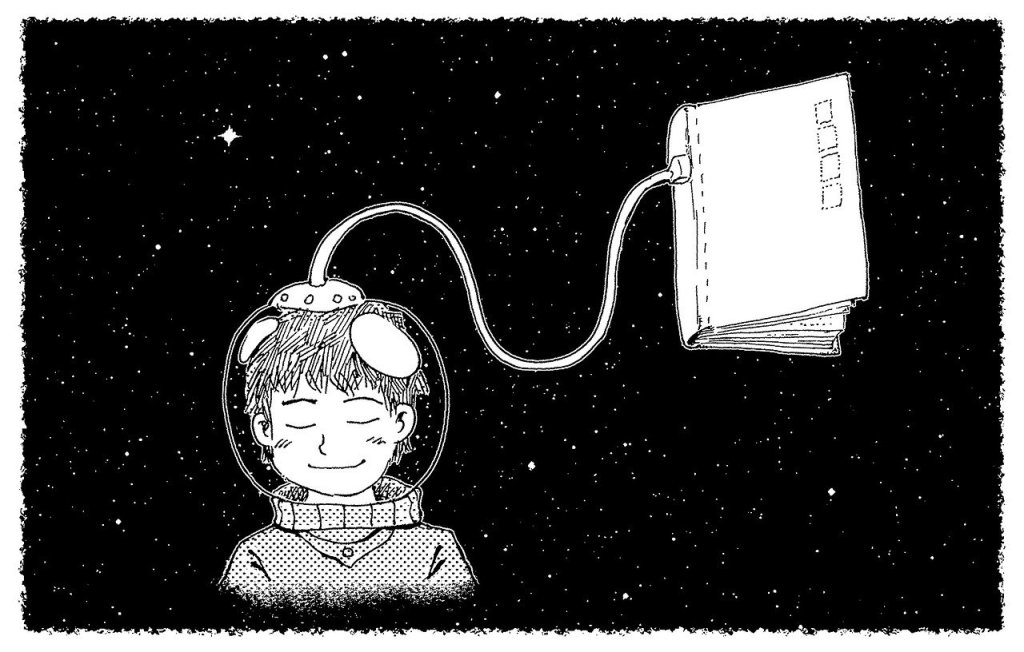
Image by 愚木混株CDD20 on Pixabay. One of the things that is interesting about the foundational readings—pieces written within the two decades spanning 1992-2012—is how current the recommendations feel during the time of COVID-19 and library closures. As Mathews (2012) states, “It’s not about adding features, but about new processes” (p. 1). Throughout the past year and a half, libraries have been challenged to offer their services in accessible ways. They did not do anything different than programming, offering materials, etc. Rather, they offered those items to the public in new formats.
At the end of March 2020, my youth services team had just wrapped up planning for the Summer Learning Program scheduled to start in the second week of June. Suddenly, our plans were upended, and we had to begin again. What we did not do was to add new things to our lineup. Instead, we figured out how to offer what we had already planned in new ways—through virtual formats and grab-and-go materials. Entertainers migrated from in-person to online, and apps were offered instead of paper forms to keep track of minutes read. We did things I had been advocating for since I was hired—to create a YouTube channel, be more intentional with our social media, and engage in ways beyond the traditional in-person Storytime.
Another way things have shifted is through how our patrons consume library materials. Buckland (1992) discussed ebooks as a part of the evolution of libraries. In the past, I found that parents and caregivers were reluctant to embrace electronic library platforms such as OverDrive and Hoopla, at least when those services were used for children and teens. Each month, I could expect around $2000 worth of requests and holds for ebooks and audiobooks for the youth side of our rural community. Last month, that number increased to over $10,000, reflecting that evolution. As stated by Casey and Savastinuk (2007), downloadable media serves “as a proactive attempt to reach out to new users and remain relevant to current ones” (p. 17). In Jaws, Brody realized they were going to need a bigger boat (MovieClips, 2011). To stay relevant, I am going to need a bigger budget.
Mathews (2012) puts it succinctly, “Which side of the revolution will we be on?” (p. 1). I am truly hoping we as library professionals are on the side of innovation and service to patrons, embracing change and delivering new opportunities to the public. The current pandemic has put these challenges into stark relief. The evolution of library services has been accelerated, and it is up to librarians and library staff to address those needs.
References
Buckland, M. K. (1992). Redesigning library services: A manifesto. American Library Association.
Casey, M. E., & Savastinuk, L. C. (2007). Library 2.0: A guide to participatory library service. Information Today.
Mathews, B. (2012). Think like a startup. https://vtechworks.lib.vt.edu/bitstream/handle/10919/18649/Think%20like%20a%20STARTUP.pdf?sequence=1&isAllowed=y
MovieClips. (2011, June 16). Jaws (1975). [Video]. YouTube. https://youtu.be/2I91DJZKRxs
-
Hello Everyone
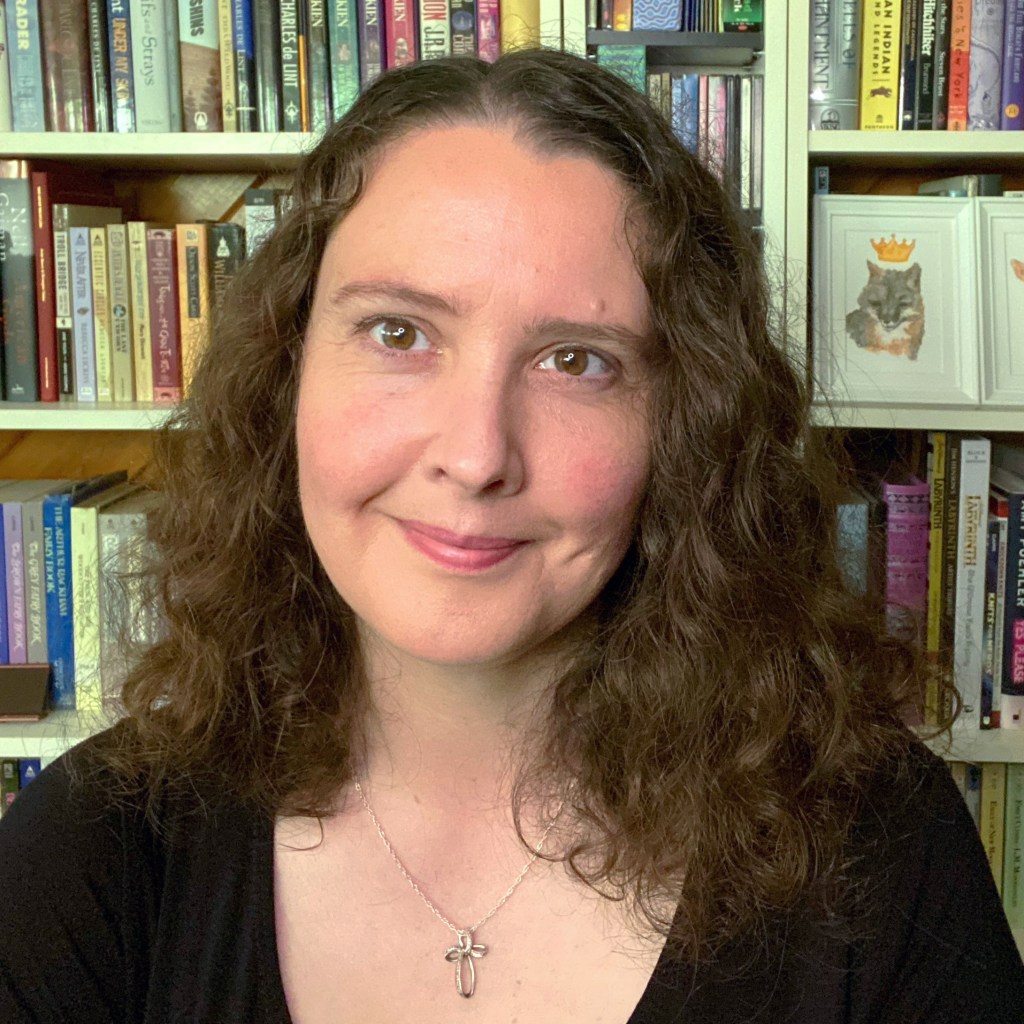
Once upon a time, there was a very new blogger—practically a baby blogger—who created a website named after the online alias she had chosen in the mid ’90s, but then thought the blog should be called something different. It may not have been the correct marketing choice, but she was still learning. The name she chose was “Book Syrup”, and on February 17, 2010, she made her first post. In honor of that archived creation, she has revived the name for this space.
Leaving third person behind, I would like to introduce myself. My name is Mellisa Hannum. My mom chose the spelling of my first name after seeing it in some family records and thinking it looked quite pretty. 16 years later, we would discover it had been misspelled in the genealogy. There is probably a metaphor for my life in that account. I bring it up as emails have a tendency to get lost if folks do not think about my name when typing. I am a Youth Services Librarian for the Nevada County Community Library in Grass Valley, California. My main focus is teens, but I serve our patrons from 0-18 as well as their caregivers. I have been volunteering in libraries since 1988. Five years ago, I landed a job with my public library and have been focusing on serving my community through programs, digital resources, and books ever since.
I chose to take this course because it intrigued me and because I want to continue to evolve in order to best serve my patrons. I love what I do, and I enjoy being an active part of the constant change in libraries as well as addressing the needs of our community.
-
Subscribe
Subscribed
Already have a WordPress.com account? Log in now.
 Book Syrup